
Post-Hurricane Damage Assessment for Refineries and Offshore Platforms
Professional drone technology has revolutionized post-hurricane damage assessment for petrochemical facilities, delivering comprehensive evaluations within 24-48 hours while eliminating traditional safety risks and reducing inspection costs by 50-70%.
Insurance carriers managing complex energy sector claims now have access to thermal imaging, AI-powered analysis, and certified inspection teams that transform weeks-long manual assessments into efficient, data-rich operations completed in days. Learn how advanced oil and gas drone inspection protocols are setting new standards for catastrophe response in the energy sector.
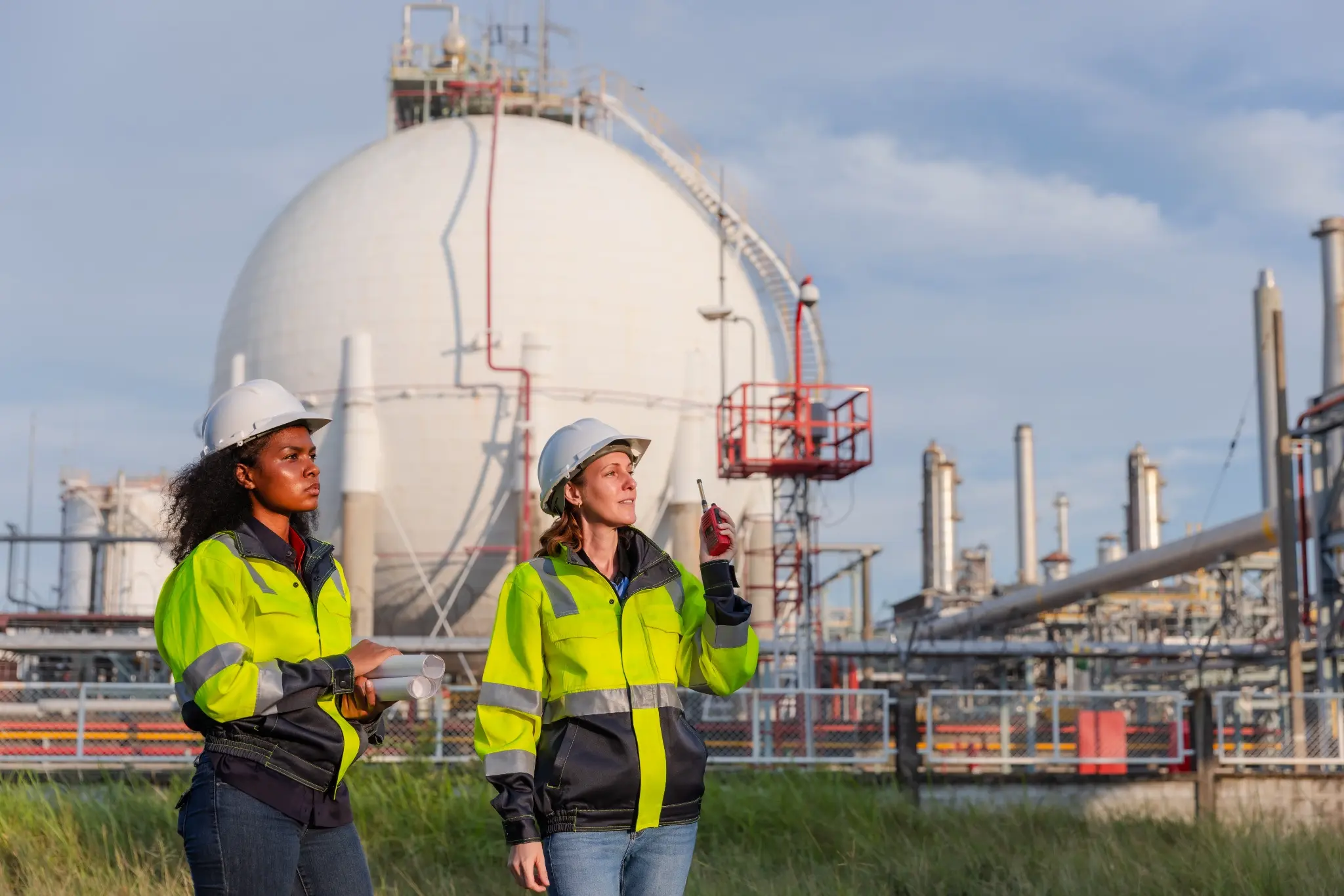
What are the critical safety zones and restricted areas that drone inspections can access after hurricane damage to refineries?
Drone inspections can safely access multiple critical zones in hurricane-damaged refineries that would be extremely hazardous for manual inspection teams. These include active flare stacks, which can reach temperatures exceeding 1,000°F and emit toxic gases; elevated pipe trays and reactor vessels that may have compromised structural integrity; LNG storage tanks requiring specialized inspections costing $30,000 per assessment according to operational data; and confined spaces within tank farms where hydrogen sulfide and other hazardous vapors may accumulate.
Traditional inspection methods would require extensive safety equipment, confined space permits, and potentially weeks of scaffold construction. In contrast, drone platforms equipped with thermal FLIR imaging sensors can capture comprehensive damage documentation from safe distances, eliminating worker exposure to fall hazards, chemical risks, and unstable structures.
Struction Solutions’ certified drone operators maintain FAA Part 107 certification and specialized petrochemical facility protocols, enabling immediate post-hurricane access to restricted areas that would otherwise require 5-10 days of safety preparation and permitting. This capability is particularly critical for insurance carriers needing rapid damage assessments to process high-value claims efficiently while maintaining adjuster safety standards.
How long does a typical drone inspection of hurricane-damaged offshore platforms take compared to traditional helicopter surveys?
Drone inspections of hurricane-damaged offshore platforms typically complete comprehensive assessments within 4-8 hours per platform, compared to 2-3 days for traditional helicopter surveys. Struction Solutions’ 24-48 hour catastrophe response protocol enables drone teams to be on-site and operational immediately after hurricane passage, while helicopter operations often face weather delays and availability constraints that can extend initial deployment to 5-7 days.
The operational efficiency gain is substantial: drone platforms can hover at specific damage points for detailed thermal imaging and high-resolution photography, capturing 4K imagery and measurements that helicopters cannot achieve due to rotor wash and safety standoff requirements. Additionally, tethered drone systems can maintain continuous 24-hour surveillance of critical infrastructure without the $3,000-$5,000 hourly costs associated with helicopter operations.
Data transmission occurs in real-time through secure channels, enabling insurance adjusters to begin claim processing while inspections continue. The company’s fleet of specialized drones, including X10 thermal platforms, can inspect multiple offshore assets in a single deployment, reducing the traditional 2-week inspection cycle to 48-72 hours total. This reduction in inspection timeline directly translates to faster claim settlements and reduced business interruption costs for energy sector clients.
What specific types of hidden damage can thermal imaging drones detect in refineries that manual inspections often miss?
Thermal imaging drones equipped with FLIR sensors detect multiple categories of hidden damage in hurricane-impacted refineries that remain invisible to manual visual inspections. According to thermal imaging studies, these systems identify insulation damage within pipe systems by detecting temperature anomalies indicating heat loss or moisture intrusion, which manual inspections miss in some cases.
Subsurface corrosion under insulation (CUI) appears as irregular heat patterns before visible deterioration occurs, enabling preventive maintenance that reduces catastrophic failure risks. Electrical system damage presents as hotspots in transformers, switchgear, and cable trays, with temperature variations as small as 2°C indicating potential failure points.Thermal imaging with specialized infrared cameras detects internal refractory damage in furnaces and reactors through distinct heat patterns, allowing for early identification that avoids costly manual inspection shutdowns.
Product leaks from damaged seals or flanges create distinctive thermal signatures, particularly in LNG systems where even minor leaks pose significant hazards. Struction Solutions’ thermal imaging capabilities have demonstrated a reduction in claim supplements by identifying these hidden issues during initial assessments. The company’s AI algorithms analyze thermal imaging data to distinguish normal operational heat patterns from hurricane-related damage, enabling accurate, comprehensive documentation that helps prevent costly claim reopenings and supports precise initial settlements.
How do drone inspections handle regulatory compliance requirements for post-hurricane assessments of hazardous material storage areas?
Drone inspections address complex regulatory compliance requirements for hazardous material storage areas through systematic documentation protocols that exceed traditional inspection capabilities. Compliance data indicates that Struction Solutions maintains multi-state licensing and specialized certifications including NFIP for flood damage assessment and Hague certification for storm damage identification, ensuring all regulatory standards are met.
For EPA Tier II facilities storing hazardous chemicals, drone platforms capture GPS-tagged imagery and thermal data that documents spill containment integrity, secondary containment vessel damage, and potential release points without exposing inspectors to chemical hazards. The company’s Blue UAS and NDAA-compliant drone platforms meet federal data security requirements essential for critical infrastructure documentation.
Real-time digital reporting through the VCA Software platform creates permanent audit trails showing inspection timestamps, weather conditions, and identified hazards, satisfying OSHA PSM (Process Safety Management) documentation requirements. The 360-degree camera technology partnership with Abatour enables regulatory inspectors to virtually attend assessments, providing live verification of compliance protocols. This approach has reduced regulatory compliance documentation time according to internal metrics, while ensuring that insurance carriers receive reports that meet both state insurance department requirements and federal environmental regulations. All data collection follows FAA Part 107 protocols for commercial drone operations in controlled airspace around petrochemical facilities.
What cost savings can insurance carriers expect when using drones for offshore platform damage assessment versus traditional methods?
Insurance carriers implementing drone-based offshore platform assessments typically realize 50-70% cost reductions compared to traditional inspection methods, according to financial impact studies. Traditional helicopter surveys for offshore platforms typically incur high daily costs that include crew transportation, safety equipment, and standby time, resulting in significant multi-day assessment expenses. In contrast, drone inspections for offshore platforms offer a more cost-effective solution, including all equipment, personnel, and reporting, significantly reducing expenses compared to traditional methods.
The financial benefits extend beyond direct inspection costs: Struction Solutions’ 60% reduction in claim processing time through automated VCA Software integration translates to faster settlements and reduced loss adjustment expense ratios. The company’s AI-powered quality assurance has demonstrated a 50% reduction in reinspection costs, eliminating the 20-35% budget allocation typically required for claim supplements.
Faster deployment capabilities (24-48 hours versus 5-7 days) reduce business interruption claim values by enabling quicker repairs. The comprehensive thermal imaging and 3D modeling capabilities prevent missed damage that leads to costly litigation, with more accurate initial assessments reducing claim disputes. Insurance carriers can expect significant cost savings in inspection and overall claim lifecycle expenses after post-hurricane events affecting multiple offshore platforms, driven by faster processing times, fewer reinspections, and reduced litigation risks.
How quickly can drone teams deploy to refineries and offshore platforms after a hurricane makes landfall?
Struction Solutions’ drone teams achieve deployment to refineries and offshore platforms within 24-48 hours of hurricane passage, leveraging a systematic pre-positioning strategy. The company’s 20+ years of catastrophe response experience enables predictive staging based on hurricane tracking, with teams positioned at strategic locations 48-72 hours before landfall. This contrasts sharply with traditional inspection services requiring 3-5 days minimum for mobilization.
The operational advantage stems from maintaining a roster of 1,000+ certified adjusters and drone pilots on 24/7 customer care during hurricane season, with equipment pre-staged in weatherproof containers. Once authorities grant access,, drone teams immediately deploy while ground-based inspectors await infrastructure repairs. For offshore platforms, drone teams can often launch from nearby platforms or vessels once conditions and permissions allow, enabling earlier access than helicopter operations that are subject to stricter helideck and weather constraints.
The veteran-owned company’s operational discipline ensures teams arrive with redundant equipment, satellite communication systems, and generator power, eliminating delays from local infrastructure damage. Real-time coordination through the company’s 24/7 operations center enables dynamic redeployment as access opens across affected regions. This rapid response capability has proven critical for high-value petrochemical claims where each day of delay can represent millions in business interruption losses.
What specialized certifications do drone operators need for inspecting damaged petrochemical facilities?
Drone operators inspecting damaged petrochemical facilities require multiple specialized certifications beyond basic FAA Part 107 commercial drone licensing. According to certification requirements, Struction Solutions maintains comprehensive credentialing including: Xactimate Levels 2 and 3 certification for accurate damage estimation in complex industrial settings; NFIP certification essential for flood damage assessment in coastal refineries; and Hague certification for identifying wind versus water damage in insurance claims.
Petrochemical-specific requirements include OSHA HAZWOPER 40-hour training for hazardous material response, SafeGulf/SafeLand certification for offshore platform access, and specialized thermal imaging certification for FLIR sensor operation. Many facilities require TWIC (Transportation Worker Identification Credential) cards for port and maritime infrastructure access. The company’s multi-state licensing enables rapid deployment across jurisdictions without regulatory delays.
Additional specialized training covers confined space awareness, H2S detection protocols, and hot work permit procedures specific to refinery operations. This comprehensive certification portfolio, maintained across the company’s 1,000+ operator roster, ensures that drone teams can immediately access and inspect sensitive infrastructure while maintaining insurance carrier compliance requirements.
For more information about implementing comprehensive drone inspection solutions that reduce fraud while improving claim processing efficiency, contact our team to understand how rapid response protocols enhance both fraud detection capabilities and legitimate claim processing speeds.


 Struction Solutions’ Vice President of Field Operations, Tina Rodriguez, oversees and maintains claim life-cycle metrics in XactAnalysis and claim handling and estimating best practices in Xactimate for Struction Solutions.
  Struction Solutions’ Chief Operating Officer, Wayne Guillot, is a results-driven and customer-focused operations manager with over 20 years of experience in the insurance industry.
  Brady Dugan is a dynamic and visionary adjuster with over 23 years of progressive leadership in the construction and insurance industries.