
Event Security Planning: How Drones Protect Large Events
Whether it is a county fair drawing thousands of families or a multi-day music festival stretching across open parkland, every large public gathering shares the same core challenge: keeping people safe without disrupting the experience they came for. Effective event security planning is what separates a smooth experience from a preventable crisis, and the tools available to security teams often determine how quickly they can identify potential threats, coordinate response, and ensure a safe and enjoyable experience for everyone in attendance.
Today, event organizers and security management professionals are pairing traditional ground-level protection with drone surveillance and aerial overwatch to close visibility gaps that ground-based security personnel simply cannot cover. This guide walks through the key elements of a comprehensive security plan, explains where drone technology fits into the broader strategy, and outlines best practices for protecting fairs, festivals, and other large-scale events.
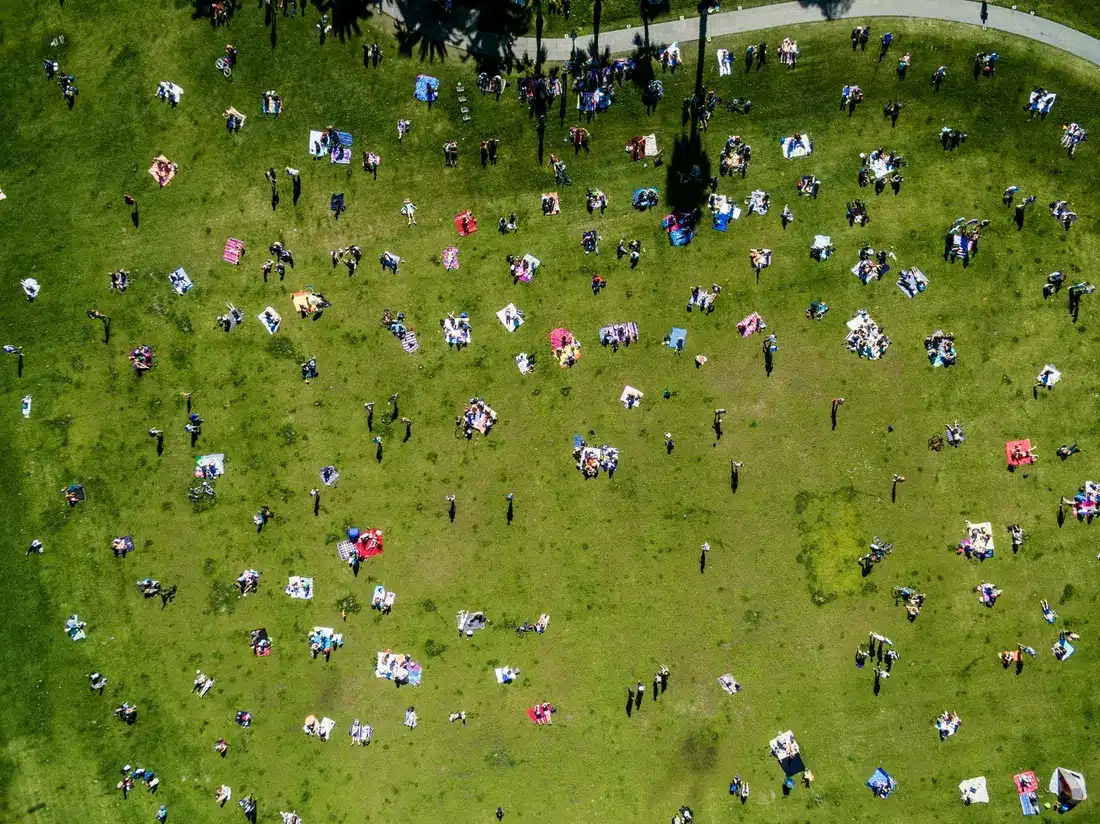
Why Large Public Gatherings Demand Strategic Planning
Large crowds create inherently complex environments. When tens of thousands of people converge on a single venue, the potential risks multiply across every dimension: medical emergencies spike, crowd control becomes harder to maintain, and events are vulnerable to security breaches that can escalate quickly.
Different types of event carry unique challenges, and every event type demands its own approach. A waterfront festival with limited exit points poses different problems than an open-field concert or a multi-block parade with rolling crowd movement. The crowd size, event layout, and surrounding geography all influence the security needs of the gathering, which is why a one-size-fits-all approach never works. Strategic planning that accounts for the specific characteristics of each special event is the only way to build a security framework that actually holds under pressure.
Conducting a Thorough Risk Assessment
Every event security plan starts with a formal risk assessment. This process forces the security team to identify potential hazards before opening day, rather than reacting to them in the moment. A structured risk assessment should evaluate:
- Venue vulnerabilities: How many access points exist? Where are the blind spots that surveillance cameras cannot reach? What physical barriers already exist, and where do gaps need closing?
- Crowd dynamics: Based on similar events at the same venue, what are the expected peak attendance periods? Where do bottlenecks typically form?
- Weather and environmental factors: Outdoor events face heat-related medical emergencies, sudden storms that push large crowds toward limited exits, and lighting conditions that change throughout the event.
- Threat history: Has this venue or event type experienced potential security incidents before? What security risks surfaced at similar events in the region?
The goal is to map every credible scenario so the planning process can address each one with specific protocols rather than general assumptions. Documenting these findings in a detailed checklist gives every member of the security staff a shared reference point.
Key Elements of a Comprehensive Event Security Plan
A robust security plan connects personnel, technology, communication, and contingency protocols into a single operating framework. For large-scale events, the plan should cover several foundational areas.
Physical security forms the first layer. This includes fencing, barricades, and controlled entry points that prevent unauthorized access and channel attendees through designated pathways. Security guards and well-trained security personnel at these positions serve as both a visible deterrent and a human verification layer for credential checks, bag searches, and compliance with safety rules.
Access control is equally critical. Mapping every entry and exit point, credentialing staff and vendors separately from general admission, and monitoring access points with dedicated security teams helps prevent unauthorized individuals from entering restricted areas. When you know exactly who is in each zone, you can manage an evacuation or shelter-in-place far more efficiently.
Communication infrastructure ties everything together. Security teams often operate across multiple agencies and jurisdictions, especially at large public events. A shared communication channel between the security company’s command center, local law enforcement, EMS, and event management staff ensures that information flows in real time rather than getting stuck in silos.
How Drone Surveillance Elevates Event Security
Ground-level security measures are necessary, but they share a fundamental limitation: restricted sightlines. A security guard posted at an intersection can see what is directly in front of them. Surveillance cameras mounted on poles cover fixed angles. Neither provides the real-time, wide-area awareness needed to manage a gathering or a large-scale crowd movement.
This is where drone surveillance and aerial overwatch change the equation. Tethered drone platforms, which receive continuous power through a physical cable, can maintain a stable position at altitudes of 70 to 100 meters for the entire duration of an event. Equipped with high-definition and thermal imaging cameras, these platforms deliver a persistent 360-degree overhead view that covers two to three square kilometers of ground.
For event security management, this capability translates into immediate operational advantages. When crowd density increases near a main stage or food vendor area, aerial monitoring and surveillance detects the buildup before it reaches dangerous levels. If an attendee suffers a medical emergency in a packed crowd, the drone’s live feed pinpoints the exact location so EMS can navigate the fastest path. When severe weather forces a sudden evacuation, aerial overwatch tracks crowd flow toward exit routes and identifies bottlenecks in real time, giving the command center the information it needs to redirect foot traffic and reduce the risk of accidents caused by surging crowds.
Unlike battery-powered drones that need frequent landings for recharging, tethered systems provide uninterrupted coverage throughout the event. They also offer secure, hardwired data transmission that eliminates the risk of signal jamming, which makes them particularly well suited for events where safety and security cannot tolerate coverage gaps.
Crowd Management Strategies Backed by Aerial Intelligence
Crowd management is one of the most difficult disciplines in event safety, and it becomes exponentially harder as attendance grows. Effective crowd management strategies rely on accurate, timely information about how people are actually moving, not just where planners expected them to go.
Drone feeds give command centers a living map of crowd behavior. Security staff can monitor density levels across every section of the venue simultaneously, something that would require dozens of fixed cameras and ground observers to approximate. When an area approaches capacity, operations teams can activate secondary pathways, deploy additional security personnel, or adjust signage before a dangerous crush develops.
This aerial intelligence also supports post-event analysis. Reviewing drone footage helps event organizers understand traffic patterns, identify design flaws in the event layout, and make data-driven improvements for future gatherings. The result is a cycle of continuous improvement that raises safety standards with each iteration.
Emergency Response and Crisis Management
No amount of careful planning eliminates all risk. What separates good security solutions from inadequate ones is the speed and coordination of the emergency response when something goes wrong. A well-developed crisis management plan details exactly who makes which decisions, what triggers escalation, and how resources get deployed.
Drones enhance emergency response by providing real-time situational awareness to incident commanders. Rather than relying on radio reports from officers navigating through dense crowds on foot, command staff can watch the situation unfold from overhead and direct responders to exact locations. This dramatically cuts response times for medical emergencies, security breaches, and evacuations alike.
Having a plan in place also means conducting tabletop exercises and scenario walkthroughs before the event. Walk through a crowd surge scenario with the security team. Simulate a weather emergency that requires rapid egress. Test whether communication channels hold up when multiple agencies are coordinating simultaneously. These drills expose gaps in the plan that can be fixed before they become real problems, and they ensure safety protocols are second nature to every team member. The goal is to identify and neutralize any issue that could disrupt the event before it spirals out of control.
Compliance, Safety Standards, and Latest Security Protocols
Event security management does not operate in a vacuum. Organizers must comply with local permitting requirements, fire codes, health and safety regulations, and increasingly, FAA airspace rules when deploying drone platforms. The 2024 FAA Reauthorization Act expanded the ability of public safety agencies to deploy tethered drone systems at public gatherings, but operators must still secure appropriate authorizations and coordinate with air traffic control when the venue falls near flight paths.
Using Blue UAS and NDAA-compliant drone platforms, rather than foreign-manufactured alternatives with known cybersecurity vulnerabilities, is also becoming a baseline requirement for government-affiliated events and any special event security operation that involves sensitive surveillance data. Ensuring your security company uses compliant, American or allied-nation manufactured equipment protects both the event and the data it generates.
Best Practices for Effective Security Planning
These best practices for event security represent the security strategies and management practices that consistently produce better outcomes regardless of event size:
- Start early. The planning process for a successful event begins months before gates open, not weeks.
- Layer your defenses. Combine physical security, dedicated security personnel, surveillance cameras, and aerial drone platforms into a unified system. No single tool handles every scenario.
- Communicate constantly. Ensure that the right security information reaches the right people throughout the event, from the command center to the most remote access point.
- Brief everyone. Every member of the security staff should know the event layout, their specific responsibilities, the escalation chain, and how to report a concern.
- Adapt in real time. Even the most comprehensive security plan must flex when conditions change. Use live aerial data to adjust staffing, redirect crowds, and manage emerging security concerns as the event runs.
Protecting What Matters Most
At its core, event security planning is about safeguarding both people and assets, from the attendees who came for a good time to the infrastructure and investments that make the event possible. Whether you are managing a small gathering or a large-scale festival that draws tens of thousands, the right security approach combines experienced security services, proven management to ensure consistent execution, and technology that fills the gaps human eyes cannot cover.
Drone surveillance and tethered aerial overwatch are not replacements for security guards, crisis management plans, or experienced event management teams. They are force multipliers that give those teams the visibility and reaction time they need security operations to deliver. When you combine well-trained security personnel on the ground with persistent aerial intelligence overhead, you build the kind of layered, responsive security framework that ensures every event may proceed as planned and every attendee goes home safely.
If you need security solutions that integrate tethered drone overwatch with proven ground-level protection for your next event, contact Struction Solutions to discuss how our veteran-led team and Blue UAS-compliant technology can ensure a safe environment for your community.
For more information about implementing comprehensive drone inspection solutions that reduce fraud while improving claim processing efficiency, contact our team to understand how rapid response protocols enhance both fraud detection capabilities and legitimate claim processing speeds.


 Struction Solutions’ Vice President of Field Operations, Tina Rodriguez, oversees and maintains claim life-cycle metrics in XactAnalysis and claim handling and estimating best practices in Xactimate for Struction Solutions.
  Struction Solutions’ Chief Operating Officer, Wayne Guillot, is a results-driven and customer-focused operations manager with over 20 years of experience in the insurance industry.
  Brady Dugan is a dynamic and visionary adjuster with over 23 years of progressive leadership in the construction and insurance industries.