
COmmercial Preventative Maintenance with Drones and Thermal Imaging
Every commercial building depends on building systems that work quietly in the background. When those systems fail, the consequences hit fast: unexpected downtime, expensive repairs, unhappy occupants, and energy bills that spiral out of control. A strong preventative maintenance program catches problems early, but traditional methods only go so far.
Drone surveys paired with thermal imaging are changing how building owners and maintenance managers approach inspections and maintenance for commercial facilities, making it faster, safer, and far more accurate.
Why Preventative Maintenance Matters for Commercial Buildings
Reactive maintenance waits for something to break. Preventive maintenance fixes issues before a breakdown disrupts operations. The difference in cost between the two approaches is significant. Regular preventative maintenance in commercial buildings reduces the likelihood of emergency service calls, extends the useful life of equipment and systems, and protects indoor air quality for everyone inside the building.
A well-structured maintenance plan covers every major system: roofing, HVAC units, plumbing, electrical, and the building envelope. When maintenance is performed on a consistent schedule, building owners avoid the cycle of costly repairs that comes from neglecting equipment and assets. Preventive maintenance helps keep overall maintenance costs predictable, which makes budgeting far easier for property managers and maintenance teams.
What Does a Commercial Preventative Maintenance Checklist Include?
A comprehensive commercial building maintenance checklist covers both interior and exterior maintenance tasks. Maintenance activities include seasonal inspections, filter replacements, system calibrations, and documentation of every finding. A proper maintenance strategy also accounts for maintenance schedules that align with manufacturer recommendations and local building codes.
For a commercial property, a typical preventive maintenance checklist should address:
- HVAC system inspection and servicing: Regularly check refrigerant levels, inspect ductwork, clean coils, and replace each filter on schedule. Preventative maintenance for commercial HVAC keeps energy consumption low and ensures better indoor air quality for every occupant.
- Roof condition assessment: Look for signs of ponding, membrane deterioration, flashing failures, and any active leak. A drone-assisted roof inspection catches these issues early, and scheduled maintenance on roofing prevents small issues from becoming full-scale replacements.
- Electrical system review: Test panels, verify grounding, inspect wiring, and confirm code compliance. Effective maintenance here prevents fire hazards and unplanned outages.
- Plumbing and drainage: Check for hidden leaks, test backflow preventers, and clear drains. Maintenance reduces water damage risk and keeps operations running.
- Building envelope and exterior: Inspect caulking, windows, siding, and parking areas. Exterior maintenance protects against weather intrusion and preserves curb appeal.
A preventive maintenance program built around this checklist ensures that every system in the building receives attention before minor wear turns into a major repair. Effective commercial maintenance includes both visual checks and diagnostic testing, which is where drone and thermal technology delivers an edge.
How Drones Elevate Commercial Building Maintenance
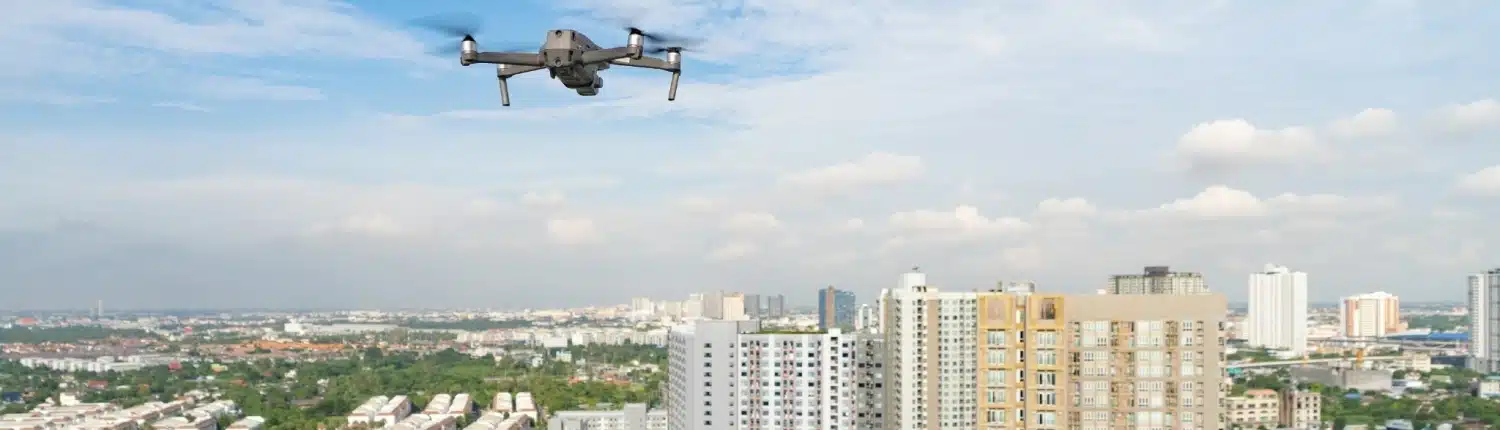
Traditional roof inspections require a technician to climb a ladder, walk a potentially compromised surface, and visually scan for damage. This process is slow, risky, and limited by what the human eye can see. When you compare drone and manual inspection methods, the advantages become clear. Drone technology changes the equation entirely. Professional drone inspection services now offer a faster, safer alternative.
A single drone flight can survey an entire commercial roof in a fraction of the time, capturing high-resolution imagery that documents every square foot. For building owners managing large portfolios or facilities with complex rooflines, this means maintenance work that once took days can now be completed in hours. Routine maintenance becomes less disruptive, and the data collected is far more detailed than what a manual walkthrough provides.
Drones also eliminate the safety risks that come with putting people on rooftops. When maintenance is required on steep, damaged, or multi-story structures, drone surveys let the maintenance team assess conditions from the ground. This proactive approach protects workers while delivering better results.
The Role of Thermal Imaging in Preventive Maintenance
Thermal imaging takes drone inspections from visual documentation to diagnostic precision. An infrared camera mounted on a drone detects temperature variations across building surfaces, revealing problems that are completely invisible to the naked eye.
For commercial HVAC equipment, thermal scans identify failing components, blocked airflow, and insulation gaps without shutting down the commercial HVAC system. A well-maintained HVAC system runs efficiently. When thermal imaging spots a developing issue, the maintenance team can schedule a targeted repair before the unit fails entirely, avoiding both the breakdown and the emergency service call that follows.
On commercial roofing, thermal imaging detects trapped moisture beneath membranes, pinpoints insulation failures, and highlights areas where energy is escaping. These are problems that a visual inspection alone would miss. Identifying a moisture intrusion early through an infrared scan can save tens of thousands of dollars compared to discovering it after the leak has caused interior damage. This is where proactive maintenance delivers its greatest return.
Building a Preventive Maintenance Plan Around Drone and Thermal Data
The real power of drone and thermal technology shows up when it becomes part of a repeatable preventive maintenance schedule. Rather than treating inspections as one-off events, building owners can use drone surveys to establish a maintenance history that tracks conditions over time.
Here is how to integrate these tools into an overall maintenance strategy:
- Baseline assessment: Perform an initial drone and thermal survey to document the current condition of all major building systems. This becomes the reference point for every future inspection.
- Quarterly or semi-annual flights: Schedule regular drone surveys aligned with your maintenance schedules. Seasonal changes affect commercial building performance differently, so regular maintenance helps catch issues tied to weather, temperature swings, and occupancy patterns.
- Targeted follow-up: When thermal imaging flags an anomaly, dispatch a technician to confirm and correct the issue. This focused approach means maintenance managers spend resources only where they are needed.
- Data integration: Feed inspection results into maintenance software to track trends, predict failures, and plan budgets. A maintenance plan backed by real data outperforms one based on guesswork every time.
This approach ensures that preventive maintenance for facility operations stays ahead of problems rather than chasing them. Maintenance helps extend the life of every asset, and a data-driven preventive maintenance plan makes that process measurable.
Cost Savings and Energy Efficiency Gains
One of the strongest arguments for drone-assisted preventative maintenance activities is the direct impact on operating costs. When maintenance prevents a catastrophic HVAC failure or catches a roof leak before it damages interior systems, the cost savings are immediate and measurable. Understanding drone inspection cost per square foot helps building owners make informed decisions about integrating this technology.
These preventive measures pay for themselves quickly, and maintenance can help avoid six-figure emergency replacements entirely. Energy efficiency improves as well. Thermal imaging reveals where a commercial building is losing conditioned air through insulation failures, HVAC inefficiencies, or envelope breaches. Addressing these findings through proper maintenance can meaningfully reduce energy consumption and lower monthly energy bills. For building owners managing multiple commercial facilities, these savings compound quickly across a portfolio.
Regular preventative maintenance also protects property value. A commercial property with documented maintenance history, clear inspection records, and proactive maintenance protocols commands better lease rates and attracts higher-quality tenants. Maintenance keeps the asset performing at its best, and that performance shows up on the balance sheet.
How to Stay on Top of Maintenance with the Right Partner
Not every inspection company has the equipment, certifications, or experience to properly maintain commercial buildings using drone and thermal technology. When evaluating partners, look for teams that combine HAAG-certified roof inspectors with ITC-certified thermographers, fly Blue UAS-compliant drone platforms, and deliver actionable reports rather than raw data dumps.
The right partner will help you perform preventative maintenance that goes beyond checking boxes. They should help you build a maintenance strategy that accounts for your specific roof types, HVAC configurations, building age, and operational requirements. Every facility needs tailored maintenance to ensure that its unique risks are addressed. Maintenance requirements vary by facility, and a guide to commercial preventative maintenance should reflect that reality.
Struction Solutions brings certified expertise, advanced drone and thermal imaging technology, and a veteran-led commitment to every commercial maintenance engagement. Our team is prepared for maintenance work across healthcare, industrial, government, and commercial properties. Whether you need a comprehensive preventative maintenance plan or a targeted thermal assessment, we deliver the diagnostic rigor and rapid response that effective maintenance demands.
Ready to modernize your commercial preventative maintenance program? Book a consultation to learn how drone surveys and thermal imaging can protect your building, reduce your overall maintenance costs, and keep your operations running without interruption.
For more information about implementing comprehensive drone inspection solutions that reduce fraud while improving claim processing efficiency, contact our team to understand how rapid response protocols enhance both fraud detection capabilities and legitimate claim processing speeds.


 Struction Solutions’ Vice President of Field Operations, Tina Rodriguez, oversees and maintains claim life-cycle metrics in XactAnalysis and claim handling and estimating best practices in Xactimate for Struction Solutions.
  Struction Solutions’ Chief Operating Officer, Wayne Guillot, is a results-driven and customer-focused operations manager with over 20 years of experience in the insurance industry.
  Brady Dugan is a dynamic and visionary adjuster with over 23 years of progressive leadership in the construction and insurance industries.