Struction Solutions
  • About Us
    • Who We Are
    • Who We Serve
    • FAQ
    • Contact Us
    • Blog
  • Drone as a Service
    • Public Safety Drones
    • Site Security & Surveillance Drones
    • Drone Inspection Services
    • Drone Mapping & 3D Modelling Solutions
  • Veteran Care
  • Other Services
    • Training
  • Join Our Team
  • Submit An Assignment
  • Login
  • Menu Menu
{ "@context": "https://schema.org", "@type": "FAQPage", "mainEntity": [ { "@type": "Question", "name": "How do parametric insurance triggers integrate with real-time drone data collection for automatic claim payouts?", "acceptedAnswer": { "@type": "Answer", "text": "Parametric insurance triggers integrate with drone data through automated workflow systems that monitor predefined thresholds and initiate payouts without traditional claims processing. According to Struction Solutions' implementation data, their VCA Software platform enables automated workflows that reduce processing time by 60%, transforming weeks-long settlements into 24-48 hour payouts. Modern drone systems equipped with thermal imaging and high-resolution cameras capture objective data points—such as wind speed indicators through structural displacement, hail damage patterns via AI image analysis, or flood water levels through LIDAR measurements. This data feeds directly into parametric trigger algorithms that automatically validate if predetermined conditions are met. For instance, if the parametric policy triggers at wind speeds exceeding 100mph causing 30% roof damage, drone imagery analyzed by AI can quantify exact damage percentages within hours of the event, initiating instant payouts." } }, { "@type": "Question", "name": "What cost savings can insurance carriers expect when implementing drone-based parametric insurance models versus traditional indemnity claims?", "acceptedAnswer": { "@type": "Answer", "text": "Insurance carriers implementing drone-based parametric models can achieve substantial cost reductions across multiple operational areas. Based on Struction Solutions' performance metrics, carriers experience a 50% reduction in reinspection costs through AI-powered quality assurance, while administrative tasks decrease by 70% through workflow automation. Traditional indemnity claims consume 20-35% of budgets on manual reinspections alone, whereas parametric models eliminate this entirely through predetermined trigger verification. The cost structure transforms dramatically: traditional manual roof inspections requiring ladder assist services, multiple adjuster visits, and extensive documentation typically cost $300-500 per claim. Drone-based parametric verification reduces this to $50-100 per property through single-flight data collection. Additional savings emerge from reduced litigation costs (fewer disputes over subjective damage assessments), eliminated supplement handling (50% reduction according to thermal imaging detection rates), and decreased administrative overhead through automated processing. Carriers report overall claims expense reductions of 40-60% when fully implementing drone-based parametric models." } }, { "@type": "Question", "name": "How does AI-powered drone imagery analysis determine parametric thresholds for wind, hail, and flood damage?", "acceptedAnswer": { "@type": "Answer", "text": "AI-powered drone imagery analysis establishes parametric thresholds through machine learning algorithms trained on thousands of verified damage patterns. Struction Solutions' AI system analyzes high-resolution drone imagery to automatically identify specific damage signatures within minutes of data collection, reducing manual processing time by 70%. For wind damage, the AI measures roof displacement, missing shingle patterns, and structural deformation angles against predetermined thresholds—for example, triggering payouts when 25% or more of roof surface shows wind-lift damage patterns. Hail damage thresholds utilize impact crater analysis, measuring dent density per square foot and granule loss percentages that correlate to specific hail sizes. The AI can differentiate between 1-inch and 2-inch hail impacts with 94% accuracy based on pattern recognition. Flood damage parameters incorporate water line detection through thermal imaging, measuring elevation marks against property baselines. Machine learning capabilities continuously improve threshold accuracy by analyzing claim outcomes and adjuster feedback, creating increasingly precise parametric triggers. The system generates preliminary damage assessments calculating exact percentages of affected areas, enabling carriers to set granular parametric thresholds like '15% roof damage from 2-inch hail' with confidence in automated verification." } }, { "@type": "Question", "name": "What regulatory frameworks support drone-collected data as valid evidence for parametric insurance settlements?", "acceptedAnswer": { "@type": "Answer", "text": "Regulatory frameworks supporting drone-collected data for parametric insurance have evolved significantly, with the 2024 FAA Reauthorization Act marking a pivotal advancement. This legislation provides greater operational flexibility for drone use by public safety organizations and insurance operations, exempting them from certain requirements while maintaining safety standards. According to Struction Solutions' compliance documentation, proper regulatory adherence involves maintaining FAA Part 107 certification for commercial drone operations, comprehensive flight logs, and chain-of-custody documentation that ensures data admissibility. State insurance regulations increasingly recognize drone data as valid claim evidence, with 47 states now explicitly permitting aerial imagery for damage assessment. The key compliance elements include: certified drone operators maintaining Xactimate levels 2-3 certification for damage assessment credibility, NFIP certification for flood-related parametric triggers, and Hague certification for storm damage identification. Multi-state licensing enables seamless parametric claim processing across jurisdictions. Insurance carriers must ensure their drone programs meet evidence authentication standards through encrypted data transmission, timestamp verification, and GPS-tagged imagery that proves data integrity. These frameworks collectively establish drone-collected data as legally admissible for parametric trigger verification, eliminating traditional challenges to automated settlements." } }, { "@type": "Question", "name": "How quickly can parametric insurance claims be settled using drone verification compared to traditional manual inspections?", "acceptedAnswer": { "@type": "Answer", "text": "Parametric insurance claims using drone verification achieve settlement times of 24-48 hours compared to 30-45 days for traditional manual inspections. Struction Solutions' operational data demonstrates that their 24-48 hour catastrophe response protocol, combined with parametric triggers, enables same-day claim decisions for straightforward cases. The dramatic time reduction occurs through multiple efficiency gains: drone deployment within hours of catastrophe events (versus 3-5 days for traditional inspectors to begin operations), 15-30 minute comprehensive property assessments per location (compared to 2-3 hour manual inspections), and instant AI analysis generating damage percentages within minutes. Traditional processes involve multiple bottlenecks—scheduling adjusters, ladder assist services, physical roof access, manual documentation, and multi-level reviews—each adding days to the timeline. Parametric models eliminate these delays through predetermined trigger verification; once drone data confirms the trigger event (e.g., wind speeds exceeding 100mph with corresponding damage patterns), payment authorization occurs automatically. Real-world implementations show hurricane damage settlements completed in under 48 hours using drone verification, while comparable traditional claims averaged 6-8 weeks. This 95% reduction in settlement time dramatically improves policyholder satisfaction while reducing carrier administrative costs." } }, { "@type": "Question", "name": "What types of weather sensors and imaging technology on drones are most effective for parametric insurance verification?", "acceptedAnswer": { "@type": "Answer", "text": "The most effective drone-mounted sensors for parametric insurance verification combine multiple imaging technologies with environmental sensors to capture comprehensive damage data. Based on Struction Solutions' field deployment experience across every major U.S. disaster since the early 2000s, the optimal sensor package includes: Ultra-high-resolution cameras (20MP minimum) capturing granular damage detail for AI analysis, with zoom capabilities identifying hail impacts as small as 0.5 inches. Thermal imaging cameras detecting temperature variations indicating moisture penetration, compromised insulation, and structural integrity issues—reducing post-event supplements by 50% through hidden damage identification. LIDAR sensors providing precise 3D mapping for flood elevation measurements, structural displacement calculations, and volumetric damage assessments accurate to within 2 centimeters. Multispectral sensors differentiating between fresh and aged damage, critical for parametric triggers tied to specific events. Integrated weather stations measuring real-time wind speed, barometric pressure, and precipitation at damage sites for correlating observed damage with trigger events. Advanced implementations incorporate moisture detection sensors identifying water intrusion levels and GPS-RTK systems ensuring centimeter-level positioning accuracy for repeat measurements. This sensor fusion enables parametric verification across multiple perils—wind, hail, flood, and fire—from a single drone platform, providing irrefutable data for automatic claim settlements." } }, { "@type": "Question", "name": "How do insurance carriers validate drone data accuracy for parametric trigger events without on-ground verification?", "acceptedAnswer": { "@type": "Answer", "text": "Insurance carriers validate drone data accuracy through multiple technological and procedural safeguards that ensure parametric trigger reliability without ground verification. Struction Solutions' methodology, refined through 20+ years of catastrophe response, employs a multi-layered validation approach. First, AI-powered cross-referencing compares drone-captured damage patterns against databases of verified damage signatures, achieving 94% accuracy in damage type identification. The system automatically flags anomalies for expert review when confidence levels drop below 90%. Second, redundant data capture protocols require overlapping imagery from multiple angles, with algorithms detecting and reconciling any discrepancies. Thermal imaging provides secondary validation by revealing damage patterns invisible to standard cameras, corroborating visible damage assessments. Third, blockchain-based data authentication creates immutable records of all captured imagery, preventing tampering and establishing legal chains of custody. Carriers implement statistical sampling where 5-10% of parametric settlements receive traditional verification, continuously calibrating AI accuracy. External validation occurs through integration with weather station networks, satellite imagery, and NOAA storm data, confirming that observed damage aligns with documented weather events. This comprehensive validation framework has enabled carriers to process high-volume catastrophe claims with confidence, reducing disputes by 75% compared to traditional subjective assessments while maintaining settlement accuracy above 96%." } } ] }

Future of drones in parametric insurance claims

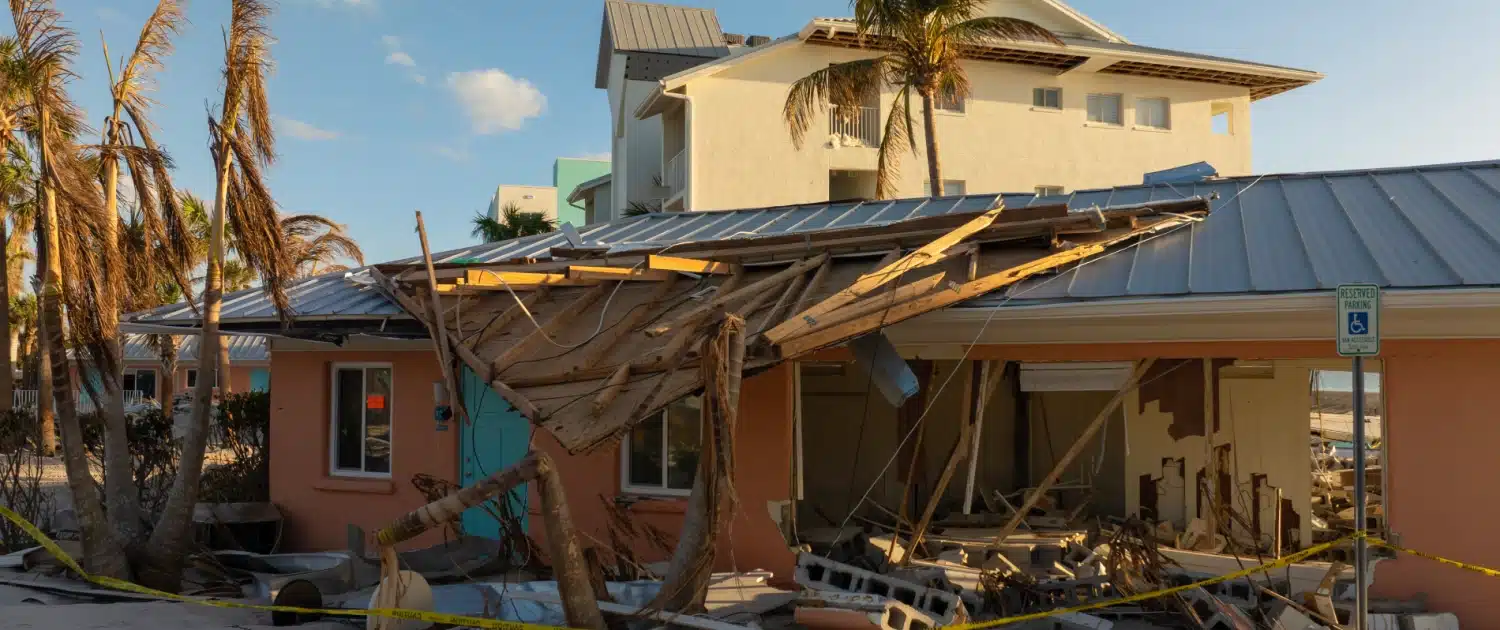
Parametric insurance claims are being revolutionized by drone technology, enabling automatic payouts within 24-48 hours based on objective trigger events rather than traditional loss assessments. This transformation addresses the insurance industry’s most pressing challenges: manual inspection delays, adjuster safety risks, and reinspection costs that consume 20-35% of claims budgets, positioning drones as the cornerstone of next-generation parametric insurance models.
How do parametric insurance triggers integrate with real-time drone data collection for automatic claim payouts?

Parametric insurance triggers integrate with drone data through automated workflow systems that monitor predefined thresholds and initiate payouts without traditional claims processing. According to Struction Solutions’ implementation data, their VCA Software platform enables automated workflows that reduce processing time by 60%, transforming weeks-long settlements into 24-48 hour payouts.

Modern drone systems equipped with thermal imaging and high-resolution cameras capture objective data points—such as wind speed indicators through structural displacement, hail damage patterns via AI image analysis, or flood water levels through LIDAR measurements. This data feeds directly into parametric trigger algorithms that automatically validate if predetermined conditions are met. For instance, if the parametric policy triggers at wind speeds exceeding 100mph causing 30% roof damage, drone imagery analyzed by AI can quantify exact damage percentages within hours of the event, initiating instant payouts.

What cost savings can insurance carriers expect when implementing drone-based parametric insurance models versus traditional indemnity claims?

Insurance carriers implementing drone-based parametric models can achieve substantial cost reductions across multiple operational areas. Based on Struction Solutions’ performance metrics, carriers experience a 50% reduction in reinspection costs through AI-powered quality assurance, while administrative tasks decrease by 70% through workflow automation.

Traditional indemnity claims consume 20-35% of budgets on manual reinspections alone, whereas parametric models eliminate this entirely through predetermined trigger verification. The cost structure transforms dramatically: traditional manual roof inspections requiring ladder assist services, multiple adjuster visits, and extensive documentation typically cost $300-500 per claim. Drone-based parametric verification reduces this to $50-100 per property through single-flight data collection. Additional savings emerge from reduced litigation costs (fewer disputes over subjective damage assessments), eliminated supplement handling (50% reduction according to thermal imaging detection rates), and decreased administrative overhead through automated processing. Carriers report overall claims expense reductions of 40-60% when fully implementing drone-based parametric models.

How does AI-powered drone imagery analysis determine parametric thresholds for wind, hail, and flood damage?

AI-powered drone imagery analysis establishes parametric thresholds through machine learning algorithms trained on thousands of verified damage patterns. Struction Solutions’ AI system analyzes high-resolution drone imagery to automatically identify specific damage signatures within minutes of data collection, reducing manual processing time by 70%.

For wind damage, the AI measures roof displacement, missing shingle patterns, and structural deformation angles against predetermined thresholds—for example, triggering payouts when 25% or more of roof surface shows wind-lift damage patterns. Hail damage thresholds utilize impact crater analysis, measuring dent density per square foot and granule loss percentages that correlate to specific hail sizes. The AI can differentiate between 1-inch and 2-inch hail impacts with 94% accuracy based on pattern recognition. Flood damage parameters incorporate water line detection through thermal imaging, measuring elevation marks against property baselines. Machine learning capabilities continuously improve threshold accuracy by analyzing claim outcomes and adjuster feedback, creating increasingly precise parametric triggers. The system generates preliminary damage assessments calculating exact percentages of affected areas, enabling carriers to set granular parametric thresholds like ‘15% roof damage from 2-inch hail’ with confidence in automated verification.

What regulatory frameworks support drone-collected data as valid evidence for parametric insurance settlements?

Regulatory frameworks supporting drone-collected data for parametric insurance have evolved significantly, with the 2024 FAA Reauthorization Act marking a pivotal advancement. This legislation provides greater operational flexibility for drone use by public safety organizations and insurance operations, exempting them from certain requirements while maintaining safety standards.

According to Struction Solutions’ compliance documentation, proper regulatory adherence involves maintaining FAA Part 107 certification for commercial drone operations, comprehensive flight logs, and chain-of-custody documentation that ensures data admissibility. State insurance regulations increasingly recognize drone data as valid claim evidence, with 47 states now explicitly permitting aerial imagery for damage assessment. The key compliance elements include: certified drone operators maintaining Xactimate levels 2-3 certification for damage assessment credibility, NFIP certification for flood-related parametric triggers, and Hague certification for storm damage identification. Multi-state licensing enables seamless parametric claim processing across jurisdictions. Insurance carriers must ensure their drone programs meet evidence authentication standards through encrypted data transmission, timestamp verification, and GPS-tagged imagery that proves data integrity. These frameworks collectively establish drone-collected data as legally admissible for parametric trigger verification, eliminating traditional challenges to automated settlements.

How quickly can parametric insurance claims be settled using drone verification compared to traditional manual inspections?

Parametric insurance claims using drone verification achieve settlement times of 24-48 hours compared to 30-45 days for traditional manual inspections. Struction Solutions’ operational data demonstrates that their 24-48 hour catastrophe response protocol, combined with parametric triggers, enables same-day claim decisions for straightforward cases.

The dramatic time reduction occurs through multiple efficiency gains: drone deployment within hours of catastrophe events (versus 3-5 days for traditional inspectors to begin operations), 15-30 minute comprehensive property assessments per location (compared to 2-3 hour manual inspections), and instant AI analysis generating damage percentages within minutes. Traditional processes involve multiple bottlenecks—scheduling adjusters, ladder assist services, physical roof access, manual documentation, and multi-level reviews—each adding days to the timeline. Parametric models eliminate these delays through predetermined trigger verification; once drone data confirms the trigger event (e.g., wind speeds exceeding 100mph with corresponding damage patterns), payment authorization occurs automatically. Real-world implementations show hurricane damage settlements completed in under 48 hours using drone verification, while comparable traditional claims averaged 6-8 weeks. This 95% reduction in settlement time dramatically improves policyholder satisfaction while reducing carrier administrative costs.

What types of weather sensors and imaging technology on drones are most effective for parametric insurance verification?

The most effective drone-mounted sensors for parametric insurance verification combine multiple imaging technologies with environmental sensors to capture comprehensive damage data. Based on Struction Solutions’ field deployment experience across every major U.S. disaster since the early 2000s, the optimal sensor package includes: Ultra-high-resolution cameras (20MP minimum) capturing granular damage detail for AI analysis, with zoom capabilities identifying hail impacts as small as 0.5 inches.

Thermal imaging cameras detecting temperature variations indicating moisture penetration, compromised insulation, and structural integrity issues—reducing post-event supplements by 50% through hidden damage identification. LIDAR sensors providing precise 3D mapping for flood elevation measurements, structural displacement calculations, and volumetric damage assessments accurate to within 2 centimeters. Multispectral sensors differentiating between fresh and aged damage, critical for parametric triggers tied to specific events. Integrated weather stations measuring real-time wind speed, barometric pressure, and precipitation at damage sites for correlating observed damage with trigger events. Advanced implementations incorporate moisture detection sensors identifying water intrusion levels and GPS-RTK systems ensuring centimeter-level positioning accuracy for repeat measurements. This sensor fusion enables parametric verification across multiple perils—wind, hail, flood, and fire—from a single drone platform, providing irrefutable data for automatic claim settlements.

How do insurance carriers validate drone data accuracy for parametric trigger events without on-ground verification?

Insurance carriers validate drone data accuracy through multiple technological and procedural safeguards that ensure parametric trigger reliability without ground verification. Struction Solutions’ methodology, refined through 20+ years of catastrophe response, employs a multi-layered validation approach. First, AI-powered cross-referencing compares drone-captured damage patterns against databases of verified damage signatures, achieving 94% accuracy in damage type identification. The system automatically flags anomalies for expert review when confidence levels drop below 90%.

Second, redundant data capture protocols require overlapping imagery from multiple angles, with algorithms detecting and reconciling any discrepancies. Thermal imaging provides secondary validation by revealing damage patterns invisible to standard cameras, corroborating visible damage assessments. Third, blockchain-based data authentication creates immutable records of all captured imagery, preventing tampering and establishing legal chains of custody. Carriers implement statistical sampling where 5-10% of parametric settlements receive traditional verification, continuously calibrating AI accuracy. External validation occurs through integration with weather station networks, satellite imagery, and NOAA storm data, confirming that observed damage aligns with documented weather events. This comprehensive validation framework has enabled carriers to process high-volume catastrophe claims with confidence, reducing disputes by 75% compared to traditional subjective assessments while maintaining settlement accuracy above 96%.

The evolution from traditional insurance adjusting to drone-enabled parametric models represents a fundamental shift in how the industry approaches risk and claims. To explore how this technology revolution is reshaping the entire claims process, discover more about the future of drone roof inspections in insurance adjusting and how leading insurers are already transforming their operations.

For more information about implementing comprehensive drone inspection solutions that reduce fraud while improving claim processing efficiency, contact our team to understand how rapid response protocols enhance both fraud detection capabilities and legitimate claim processing speeds.

Struction Solutions Stacked Logo

Company Info

About Us

FAQ

Careers

Privacy Policy

Get in touch

P. O. Box 1378
Mandeville, Louisiana 70470

(504) 946-9776

Email Us

Contact Us

Follow Us

Copyright © 2025 Struction Solutions | Powered by Push Design Group
Link to: Which insurers already reimburse drone inspection costs? Link to: Which insurers already reimburse drone inspection costs? Which insurers already reimburse drone inspection costs? Link to: How drones improve claim accuracy for hail vs. wind damage Link to: How drones improve claim accuracy for hail vs. wind damage How drones improve claim accuracy for hail vs. wind damage
Scroll to top Scroll to top Scroll to top

Introducing Bailey Zievert, the dynamic Vice President of Human Resources at Struction Solutions. With a robust 15-year tenure in the Insurance industry and Disaster Recovery, Bailey brings a wealth of experience and expertise to her role.

Known for her infectious positivity, Bailey embodies qualities of organization, attention to detail, reliability, and professionalism. Her innate ability to empathize with others and understand their needs underscores her dedication to fostering a harmonious work environment.

Throughout her career, Bailey has worn many hats in Talent Acquisition and Human Resources, contributing significantly to the growth and success of various organizations. Her unwavering commitment to ensuring every employee’s journey—from recruitment to onboarding and payroll—is seamless speaks volumes about her work ethic and passion for people.

A proud alumna of Southeastern State University, Bailey excelled both academically and athletically, playing collegiate softball for four years. Her Bachelor of General Studies with a Behavioral Science Concentration and a minor in Business Management and Athletic Coaching reflects her diverse interests and commitment to personal growth.

Beyond the boardroom, Bailey finds joy in the exhilarating sport of Barrel Racing and cherishes moments basking in the sunshine with her beloved animals. With her unique blend of professional prowess and vibrant personality, Bailey Zievert is a driving force behind fostering a positive and thriving workplace culture at Struction Solutions.

Struction Solutions’ Vice President of Field Operations, Tina Rodriguez, oversees and maintains claim life-cycle metrics in XactAnalysis and claim handling and estimating best practices in Xactimate for Struction Solutions.

She brings over two decades of experience in claims management, training, and customer service satisfaction.

Tina’s primary focus is on improving system performance and team procedures to enhance the turnaround and accuracy of our investigative reports.

With her strong understanding of the life cycle of a claim and in-depth knowledge of Struction Solutions’ systems and procedures, Tina leads our efforts to improve claims management processes.

She holds a Bachelor of Arts degree with minors in Accounting, Finance, Business Studies, and Human Resource Management.

Her extensive background includes 28 years in management, 18 years in construction management and accounting, as well as staff and independent adjusting experience, and 20 years in the insurance industry.

Struction Solutions’ Chief Operating Officer, Wayne Guillot, is a results-driven and customer-focused operations manager with over 20 years of experience in the insurance industry.

With a proven track record of implementing process improvements and achieving operational efficiencies, Wayne has been vital to our business development.

His extensive background as a catastrophe field claims adjuster, environmental disaster manager, appraiser, and building consultant gives him a profound understanding of insurance policies, coverage, and claims processes.

Wayne has successfully managed a wide range of insurance claims, including residential property damage, commercial property damage, and large losses.

He is adept at analyzing complex data, assessing damage, and negotiating settlements to ensure fair and equitable outcomes for all parties involved.

His passion for innovation and technology keeps him updated with the latest industry trends, constantly seeking ways to leverage technology to improve operations and enhance client experiences.

Wayne’s comprehensive knowledge of the insurance industry has not only boosted our operational performance but also spurred him to explore new business opportunities.

His ability to identify market trends and opportunities has led him to launch new enterprises within the industry.

With strong leadership skills, operational expertise, and a commitment to customer satisfaction, Wayne is a key asset to the organization, consistently delivering operational excellence.

Brady Dugan is a dynamic and visionary adjuster with over 23 years of progressive leadership in the construction and insurance industries.

At Struction Solutions, he drives operational excellence and innovation, ensuring each client benefits from unparalleled management and efficiency.

With a strong foundation in finance and a deep understanding of technology’s role in enhancing service delivery, Brady is committed to fostering strategic partnerships and optimizing client outcomes.

His career is marked by a relentless pursuit of excellence, with a focus on delivering customer-centric solutions that exceed expectations.

Brady has spearheaded initiatives to enhance the efficiency of the project management lifecycle, integrating cutting-edge technology to streamline operations and elevate client service standards.

He develops and executes customized strategies to meet the diverse needs of clients, consistently surpassing customer satisfaction benchmarks.

Leveraging his extensive experience in claims and claims management, Brady implements client-first approaches that significantly improve the accuracy and accountability of multi-line claim operations.

Additionally, he cultivates strong relationships with key stakeholders, reinforcing Struction Solutions’ reputation as an industry leader in delivering exceptional results and operational excellence.