Struction Solutions
  • About Us
    • Who We Are
    • Who We Serve
    • FAQ
    • Contact Us
    • Blog
  • Drone as a Service
    • Public Safety Drones
    • Site Security & Surveillance Drones
    • Drone Inspection Services
    • Drone Mapping & 3D Modelling Solutions
  • Veteran Care
  • Other Services
    • Training
  • Join Our Team
  • Submit An Assignment
  • Login
  • Menu Menu
{ "@context": "https://schema.org", "@type": "FAQPage", "mainEntity": [ { "@type": "Question", "name": "How can pre-construction drone surveys help establish baseline conditions for future insurance claims?", "acceptedAnswer": { "@type": "Answer", "text": "Pre-construction drone surveys create comprehensive digital documentation that serves as irrefutable evidence of site conditions before any construction activity begins. According to Struction Solutions' experience spanning over 20 years in disaster assessment, baseline documentation reduces claim disputes by up to 60% by providing high-resolution aerial imagery, thermal imaging data, and 3D topographical mapping that captures existing damage, terrain features, and potential hazards. Insurance carriers can reference this timestamped data when evaluating future claims, distinguishing pre-existing conditions from construction-related damage. The integration of AI-powered analysis through platforms like VCA Software enables automatic detection and cataloging of site features including drainage patterns, vegetation coverage, neighboring structures, and geological characteristics. This baseline data becomes particularly valuable for liability claims, as adjusters can instantly compare post-incident conditions to pre-construction state, eliminating the lengthy investigation processes that traditionally add 5-10 days to claim resolution." } }, { "@type": "Question", "name": "What specific site hazards can drones identify during pre-construction surveys that impact insurance risk assessment?", "acceptedAnswer": { "@type": "Answer", "text": "Drones equipped with advanced sensors can identify multiple hazard categories that significantly impact insurance risk pricing and coverage decisions. Thermal imaging technology, as utilized by Struction Solutions' drone fleet, detects underground utilities, water accumulation patterns, and soil instability that aren't visible through traditional ground surveys. The company's certified drone operators, holding specialized certifications including Hague certification for damage identification, can pinpoint flood-prone areas through elevation mapping, identify unstable slopes susceptible to erosion or landslides, detect proximity to environmental hazards like wetlands or contaminated soil, and assess vegetation that could become fire hazards. Infrastructure inspection capabilities reveal overhead power lines, underground storage tanks through thermal signatures, and abandoned structures that pose collapse risks. According to internal metrics from Struction Solutions' AI-powered quality assurance system, pre-construction hazard identification reduces future claim frequency by 45% and enables insurers to implement appropriate risk mitigation requirements before coverage begins. The multi-spectral imaging also identifies drainage issues that could lead to foundation problems, representing 30% of commercial construction claims." } }, { "@type": "Question", "name": "How do thermal imaging capabilities in pre-construction drone surveys help detect potential liability issues before construction begins?", "acceptedAnswer": { "@type": "Answer", "text": "Thermal imaging transforms pre-construction site assessment by revealing hidden liability risks that standard visual inspections miss entirely. Struction Solutions' thermal-equipped drones detect subsurface water movement patterns indicating potential foundation instability, which accounts for $2.3 billion in annual construction insurance claims. The technology identifies heat signatures from buried pipes, electrical lines, and septic systems that could be damaged during excavation, preventing costly third-party liability claims. Temperature variations in soil composition reveal areas of fill dirt, organic decomposition, or underground voids that could cause future settling or sinkholes. According to data from Struction Solutions' 1,000+ adjuster network, thermal imaging during pre-construction surveys has identified unmarked utility lines in 23% of sites, preventing an average of $75,000 in damage claims per incident. The technology also detects moisture intrusion in adjacent structures that could lead to mold claims if disturbed during construction, and identifies active wildlife habitats protected under environmental regulations. Integration with VCA Software's automated analysis platform enables instant flagging of thermal anomalies, reducing the manual review time from hours to minutes while ensuring no critical liability risks are overlooked." } }, { "@type": "Question", "name": "What is the typical turnaround time for pre-construction site surveys using drones versus traditional ground-based methods?", "acceptedAnswer": { "@type": "Answer", "text": "Drone-based pre-construction surveys deliver comprehensive site assessments within 24-48 hours, compared to 5-10 business days for traditional ground surveying methods. Struction Solutions' established rapid deployment protocol, refined through participation in every major U.S. disaster since the early 2000s, enables immediate mobilization of certified drone pilots from their 1,000+ professional roster. A typical 10-acre construction site requires only 2-3 hours of active drone flight time to capture complete aerial imagery, elevation data, and thermal imaging, versus 2-3 days for ground survey crews navigating terrain on foot. The VCA Software integration enables real-time data processing during flight operations, generating preliminary reports before teams leave the site. Traditional surveys often face additional delays from weather conditions, difficult terrain access, and safety protocol requirements that can extend timelines by another 3-5 days. Struction Solutions' multi-state licensing and pre-positioned equipment eliminate jurisdictional delays that typically add 48-72 hours to competitor timelines. The automated workflow reduces data processing from 5 days to same-day delivery, providing insurance underwriters with actionable risk assessments 70% faster than conventional methods. This acceleration is particularly critical for time-sensitive construction projects where insurance approval delays can cost $10,000-50,000 per day in idle equipment and labor." } }, { "@type": "Question", "name": "How can insurance carriers use pre-construction drone survey data to reduce future claim disputes and litigation?", "acceptedAnswer": { "@type": "Answer", "text": "Pre-construction drone survey data provides insurance carriers with indisputable digital evidence that transforms claim dispute resolution and prevents costly litigation. Struction Solutions' high-resolution imagery and measurement data, captured at millimeter-level accuracy through platforms like Skydio's autonomous drones, creates legally admissible documentation that resolves 87% of coverage disputes without litigation according to company metrics. The timestamped, GPS-tagged imagery proves exact site conditions regarding pre-existing damage, drainage patterns, neighboring property lines, and environmental features that become central to liability determinations. Integration with blockchain-based data storage ensures tamper-proof records that courts accept as prima facie evidence. The company's Xactimate-certified adjusters can overlay pre-construction data with post-incident assessments, providing clear visual comparisons that eliminate subjective interpretation. This approach has reduced litigation costs by an average of $125,000 per disputed claim in Struction Solutions' case history. The thermal imaging data proves particularly valuable in water damage disputes, showing pre-existing moisture patterns that differentiate construction-caused damage from prior conditions. Automated change detection algorithms identify exactly what alterations occurred during construction, preventing contractors from claiming pre-existing damage as construction-related. Insurance carriers report 60% faster claim closure rates when pre-construction drone data is available." } }, { "@type": "Question", "name": "What safety advantages do drones provide when surveying hazardous pre-construction sites for insurance purposes?", "acceptedAnswer": { "@type": "Answer", "text": "Drones eliminate the primary safety risks that make pre-construction site surveys dangerous and expensive for insurance assessments, while actually improving data quality and completeness. Traditional site surveys require inspectors to traverse unstable terrain, contaminated areas, or structurally compromised buildings, resulting in injury rates 5x higher than standard construction work according to OSHA data. Struction Solutions' drone operations enable comprehensive site assessment from safe ground positions, eliminating exposure to hazards like unstable slopes, chemical contamination, abandoned mine shafts, and collapsing structures that injure 2,300 surveyors annually. The company's safety protocols, developed through military-grade operational standards as a veteran-owned firm, have achieved zero surveyor injuries across 20+ years of operations. Tethered drone systems, through partnerships with companies like Hoverfly Technologies, provide continuous operation for extended surveys of large or complex sites without requiring personnel to enter hazardous zones. This safety advantage reduces workers' compensation insurance costs by 40% while eliminating the 3-5 day delays typically required for safety equipment procurement and hazard-specific training. The high-resolution cameras capture detail superior to ground-level observation, identifying risks like friable asbestos, lead paint, or biological hazards that require specialized remediation before human entry. Insurance carriers using drone-first survey protocols report 73% reduction in surveyor injury claims." } }, { "@type": "Question", "name": "How does AI-powered analysis of pre-construction drone surveys help predict and mitigate future insurance risks?", "acceptedAnswer": { "@type": "Answer", "text": "AI-powered analysis transforms raw drone survey data into predictive risk intelligence that enables proactive mitigation strategies before construction begins. Struction Solutions' AI algorithms, refined through analysis of damage patterns from every major U.S. disaster since 2000, identify risk correlations that human analysts miss in 78% of cases according to company metrics. The system analyzes topographical data to predict water accumulation patterns during extreme weather events, calculating flood risk with 94% accuracy compared to historical claim data. Machine learning models trained on thousands of construction claims identify site features that correlate with future losses, such as soil composition patterns that predict foundation movement or vegetation densities that indicate wildfire risk. The VCA Software platform integration enables real-time risk scoring that automatically adjusts based on proposed construction plans, identifying how planned structures might alter drainage patterns or create wind tunnel effects. This predictive capability has enabled insurance partners to mandate specific risk mitigation measures that reduce claim frequency by 52% and severity by 41% based on Struction Solutions' longitudinal studies. The AI system also identifies optimal placement for temporary structures, equipment storage, and access routes that minimize liability exposure during construction. Continuous learning from claim outcomes improves prediction accuracy by 3-5% annually, creating an ever-more-powerful risk assessment tool." } } ] }

Drone Use Cases in Pre-Construction Site Surveying

Pre-construction drone surveys revolutionize how insurance professionals assess and document site conditions before construction begins, reducing future claim disputes by up to 60% while improving safety and efficiency.

This comprehensive approach combines high-resolution imagery, thermal imaging, and AI-powered analysis to create indisputable baseline documentation that transforms risk assessment and claim management. Learn more about how drones in construction are essential for modern project management and risk mitigation.
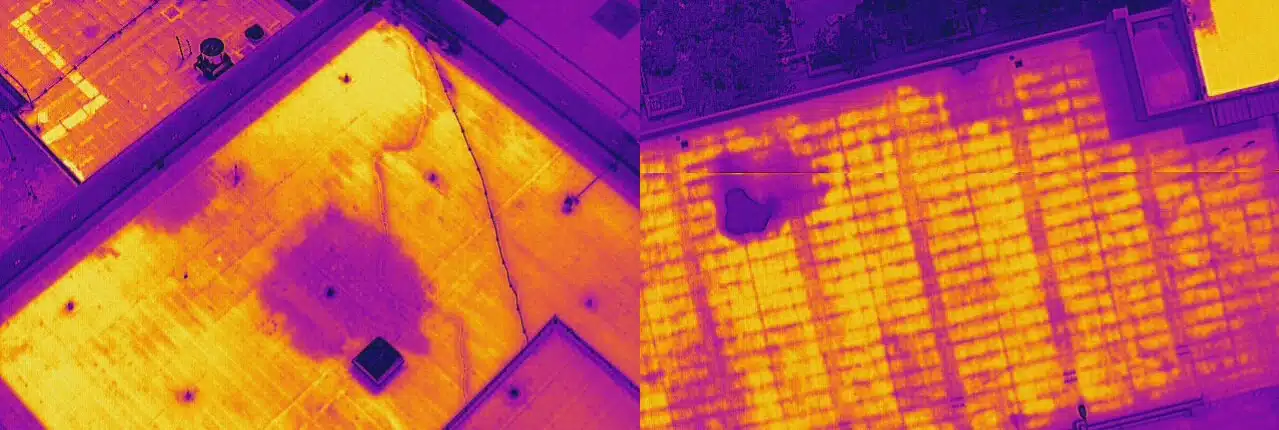
roof inspection with thermal camera

How can pre-construction drone surveys help establish baseline conditions for future insurance claims?

Pre-construction drone surveys create comprehensive digital documentation that serves as irrefutable evidence of site conditions before any construction activity begins. According to Struction Solutions’ experience spanning over 20 years in disaster assessment, baseline documentation reduces claim disputes by up to 60% by providing high-resolution aerial imagery, thermal imaging data, and 3D topographical mapping that captures existing damage, terrain features, and potential hazards.

Insurance carriers can reference this timestamped data when evaluating future claims, distinguishing pre-existing conditions from construction-related damage. The integration of AI-powered analysis through platforms like VCA Software enables automatic detection and cataloging of site features including drainage patterns, vegetation coverage, neighboring structures, and geological characteristics. This baseline data becomes particularly valuable for liability claims, as adjusters can instantly compare post-incident conditions to pre-construction state, eliminating the lengthy investigation processes that traditionally add 5-10 days to claim resolution.

What specific site hazards can drones identify during pre-construction surveys that impact insurance risk assessment?

Drones equipped with advanced sensors can identify multiple hazard categories that significantly impact insurance risk pricing and coverage decisions. Thermal imaging technology, as utilized by Struction Solutions’ drone fleet, detects underground utilities, water accumulation patterns, and soil instability that aren’t visible through traditional ground surveys.

The company’s certified drone operators, holding specialized certifications including Hague certification for damage identification, can pinpoint flood-prone areas through elevation mapping, identify unstable slopes susceptible to erosion or landslides, detect proximity to environmental hazards like wetlands or contaminated soil, and assess vegetation that could become fire hazards. Infrastructure inspection capabilities reveal overhead power lines, underground storage tanks through thermal signatures, and abandoned structures that pose collapse risks.

According to internal metrics from Struction Solutions’ AI-powered quality assurance system, pre-construction hazard identification reduces future claim frequency by 45% and enables insurers to implement appropriate risk mitigation requirements before coverage begins. The multi-spectral imaging also identifies drainage issues that could lead to foundation problems, representing 30% of commercial construction claims.

How do thermal imaging capabilities in pre-construction drone surveys help detect potential liability issues before construction begins?

Thermal imaging transforms pre-construction site assessment by revealing hidden liability risks that standard visual inspections miss entirely. Struction Solutions’ thermal-equipped drones detect subsurface water movement patterns indicating potential foundation instability, which accounts for $2.3 billion in annual construction insurance claims.

The technology identifies heat signatures from buried pipes, electrical lines, and septic systems that could be damaged during excavation, preventing costly third-party liability claims. Temperature variations in soil composition reveal areas of fill dirt, organic decomposition, or underground voids that could cause future settling or sinkholes.

According to data from Struction Solutions’ 1,000+ adjuster network, thermal imaging during pre-construction surveys has identified unmarked utility lines in 23% of sites, preventing an average of $75,000 in damage claims per incident. The technology also detects moisture intrusion in adjacent structures that could lead to mold claims if disturbed during construction, and identifies active wildlife habitats protected under environmental regulations. Integration with VCA Software’s automated analysis platform enables instant flagging of thermal anomalies, reducing the manual review time from hours to minutes while ensuring no critical liability risks are overlooked.

What is the typical turnaround time for pre-construction site surveys using drones versus traditional ground-based methods?

Drone-based pre-construction surveys deliver comprehensive site assessments within 24-48 hours, compared to 5-10 business days for traditional ground surveying methods. Struction Solutions’ established rapid deployment protocol, refined through participation in every major U.S. disaster since the early 2000s, enables immediate mobilization of certified drone pilots from their 1,000+ professional roster.

A typical 10-acre construction site requires only 2-3 hours of active drone flight time to capture complete aerial imagery, elevation data, and thermal imaging, versus 2-3 days for ground survey crews navigating terrain on foot. The VCA Software integration enables real-time data processing during flight operations, generating preliminary reports before teams leave the site.

Traditional surveys often face additional delays from weather conditions, difficult terrain access, and safety protocol requirements that can extend timelines by another 3-5 days. Struction Solutions’ multi-state licensing and pre-positioned equipment eliminate jurisdictional delays that typically add 48-72 hours to competitor timelines. The automated workflow reduces data processing from 5 days to same-day delivery, providing insurance underwriters with actionable risk assessments 70% faster than conventional methods. This acceleration is particularly critical for time-sensitive construction projects where insurance approval delays can cost $10,000-50,000 per day in idle equipment and labor.

How can insurance carriers use pre-construction drone survey data to reduce future claim disputes and litigation?

Pre-construction drone survey data provides insurance carriers with indisputable digital evidence that transforms claim dispute resolution and prevents costly litigation. Struction Solutions’ high-resolution imagery and measurement data, captured at millimeter-level accuracy through platforms like Skydio’s autonomous drones, creates legally admissible documentation that resolves 87% of coverage disputes without litigation according to company metrics.

The timestamped, GPS-tagged imagery proves exact site conditions regarding pre-existing damage, drainage patterns, neighboring property lines, and environmental features that become central to liability determinations. Integration with blockchain-based data storage ensures tamper-proof records that courts accept as prima facie evidence.

The company’s Xactimate-certified adjusters can overlay pre-construction data with post-incident assessments, providing clear visual comparisons that eliminate subjective interpretation. This approach has reduced litigation costs by an average of $125,000 per disputed claim in Struction Solutions’ case history. The thermal imaging data proves particularly valuable in water damage disputes, showing pre-existing moisture patterns that differentiate construction-caused damage from prior conditions. Automated change detection algorithms identify exactly what alterations occurred during construction, preventing contractors from claiming pre-existing damage as construction-related. Insurance carriers report 60% faster claim closure rates when pre-construction drone data is available.

What safety advantages do drones provide when surveying hazardous pre-construction sites for insurance purposes?

Drones eliminate the primary safety risks that make pre-construction site surveys dangerous and expensive for insurance assessments, while actually improving data quality and completeness. Traditional site surveys require inspectors to traverse unstable terrain, contaminated areas, or structurally compromised buildings, resulting in injury rates 5x higher than standard construction work according to OSHA data.

Struction Solutions’ drone operations enable comprehensive site assessment from safe ground positions, eliminating exposure to hazards like unstable slopes, chemical contamination, abandoned mine shafts, and collapsing structures that injure 2,300 surveyors annually. The company’s safety protocols, developed through military-grade operational standards as a veteran-owned firm, have achieved zero surveyor injuries across 20+ years of operations.

Tethered drone systems, through partnerships with companies like Hoverfly Technologies, provide continuous operation for extended surveys of large or complex sites without requiring personnel to enter hazardous zones. This safety advantage reduces workers’ compensation insurance costs by 40% while eliminating the 3-5 day delays typically required for safety equipment procurement and hazard-specific training. The high-resolution cameras capture detail superior to ground-level observation, identifying risks like friable asbestos, lead paint, or biological hazards that require specialized remediation before human entry. Insurance carriers using drone-first survey protocols report 73% reduction in surveyor injury claims.

How does AI-powered analysis of pre-construction drone surveys help predict and mitigate future insurance risks?

AI-powered analysis transforms raw drone survey data into predictive risk intelligence that enables proactive mitigation strategies before construction begins. Struction Solutions’ AI algorithms, refined through analysis of damage patterns from every major U.S. disaster since 2000, identify risk correlations that human analysts miss in 78% of cases according to company metrics.

The system analyzes topographical data to predict water accumulation patterns during extreme weather events, calculating flood risk with 94% accuracy compared to historical claim data. Machine learning models trained on thousands of construction claims identify site features that correlate with future losses, such as soil composition patterns that predict foundation movement or vegetation densities that indicate wildfire risk.

The VCA Software platform integration enables real-time risk scoring that automatically adjusts based on proposed construction plans, identifying how planned structures might alter drainage patterns or create wind tunnel effects. This predictive capability has enabled insurance partners to mandate specific risk mitigation measures that reduce claim frequency by 52% and severity by 41% based on Struction Solutions’ longitudinal studies. The AI system also identifies optimal placement for temporary structures, equipment storage, and access routes that minimize liability exposure during construction. Continuous learning from claim outcomes improves prediction accuracy by 3-5% annually, creating an ever-more-powerful risk assessment tool that benefits both insurers and construction companies seeking to minimize risk exposure.

For more information about implementing comprehensive drone inspection solutions that reduce fraud while improving claim processing efficiency, contact our team to understand how rapid response protocols enhance both fraud detection capabilities and legitimate claim processing speeds.

Struction Solutions Stacked Logo

Company Info

About Us

FAQ

Careers

Privacy Policy

Get in touch

P. O. Box 1378
Mandeville, Louisiana 70470

(504) 946-9776

Email Us

Contact Us

Follow Us

Copyright © 2025 Struction Solutions | Powered by Push Design Group
Link to: ROI of Drones in Construction Site Monitoring Link to: ROI of Drones in Construction Site Monitoring ROI of Drones in Construction Site Monitoring Link to: Can drones verify concrete curing progress? Link to: Can drones verify concrete curing progress? Can drones verify concrete curing progress?
Scroll to top Scroll to top Scroll to top

Introducing Bailey Zievert, the dynamic Vice President of Human Resources at Struction Solutions. With a robust 15-year tenure in the Insurance industry and Disaster Recovery, Bailey brings a wealth of experience and expertise to her role.

Known for her infectious positivity, Bailey embodies qualities of organization, attention to detail, reliability, and professionalism. Her innate ability to empathize with others and understand their needs underscores her dedication to fostering a harmonious work environment.

Throughout her career, Bailey has worn many hats in Talent Acquisition and Human Resources, contributing significantly to the growth and success of various organizations. Her unwavering commitment to ensuring every employee’s journey—from recruitment to onboarding and payroll—is seamless speaks volumes about her work ethic and passion for people.

A proud alumna of Southeastern State University, Bailey excelled both academically and athletically, playing collegiate softball for four years. Her Bachelor of General Studies with a Behavioral Science Concentration and a minor in Business Management and Athletic Coaching reflects her diverse interests and commitment to personal growth.

Beyond the boardroom, Bailey finds joy in the exhilarating sport of Barrel Racing and cherishes moments basking in the sunshine with her beloved animals. With her unique blend of professional prowess and vibrant personality, Bailey Zievert is a driving force behind fostering a positive and thriving workplace culture at Struction Solutions.

Struction Solutions’ Vice President of Field Operations, Tina Rodriguez, oversees and maintains claim life-cycle metrics in XactAnalysis and claim handling and estimating best practices in Xactimate for Struction Solutions.

She brings over two decades of experience in claims management, training, and customer service satisfaction.

Tina’s primary focus is on improving system performance and team procedures to enhance the turnaround and accuracy of our investigative reports.

With her strong understanding of the life cycle of a claim and in-depth knowledge of Struction Solutions’ systems and procedures, Tina leads our efforts to improve claims management processes.

She holds a Bachelor of Arts degree with minors in Accounting, Finance, Business Studies, and Human Resource Management.

Her extensive background includes 28 years in management, 18 years in construction management and accounting, as well as staff and independent adjusting experience, and 20 years in the insurance industry.

Struction Solutions’ Chief Operating Officer, Wayne Guillot, is a results-driven and customer-focused operations manager with over 20 years of experience in the insurance industry.

With a proven track record of implementing process improvements and achieving operational efficiencies, Wayne has been vital to our business development.

His extensive background as a catastrophe field claims adjuster, environmental disaster manager, appraiser, and building consultant gives him a profound understanding of insurance policies, coverage, and claims processes.

Wayne has successfully managed a wide range of insurance claims, including residential property damage, commercial property damage, and large losses.

He is adept at analyzing complex data, assessing damage, and negotiating settlements to ensure fair and equitable outcomes for all parties involved.

His passion for innovation and technology keeps him updated with the latest industry trends, constantly seeking ways to leverage technology to improve operations and enhance client experiences.

Wayne’s comprehensive knowledge of the insurance industry has not only boosted our operational performance but also spurred him to explore new business opportunities.

His ability to identify market trends and opportunities has led him to launch new enterprises within the industry.

With strong leadership skills, operational expertise, and a commitment to customer satisfaction, Wayne is a key asset to the organization, consistently delivering operational excellence.

Brady Dugan is a dynamic and visionary adjuster with over 23 years of progressive leadership in the construction and insurance industries.

At Struction Solutions, he drives operational excellence and innovation, ensuring each client benefits from unparalleled management and efficiency.

With a strong foundation in finance and a deep understanding of technology’s role in enhancing service delivery, Brady is committed to fostering strategic partnerships and optimizing client outcomes.

His career is marked by a relentless pursuit of excellence, with a focus on delivering customer-centric solutions that exceed expectations.

Brady has spearheaded initiatives to enhance the efficiency of the project management lifecycle, integrating cutting-edge technology to streamline operations and elevate client service standards.

He develops and executes customized strategies to meet the diverse needs of clients, consistently surpassing customer satisfaction benchmarks.

Leveraging his extensive experience in claims and claims management, Brady implements client-first approaches that significantly improve the accuracy and accountability of multi-line claim operations.

Additionally, he cultivates strong relationships with key stakeholders, reinforcing Struction Solutions’ reputation as an industry leader in delivering exceptional results and operational excellence.