
Average Turnaround Time for Drone Roof Inspections After Hurricanes
Professional drone roof inspections after major hurricanes typically deliver comprehensive damage assessments within 24-48 hours of deployment, representing a transformative improvement over traditional manual inspection methods that can take weeks to complete.
This rapid turnaround time is critical for insurance carriers managing high-volume catastrophe claims while maintaining accuracy and adjuster safety standards. Leading providers like Struction Solutions have pioneered systematic approaches that combine cutting-edge drone technology with veteran expertise to consistently deliver results within this accelerated timeframe.
What is the typical turnaround time for drone roof inspections after hurricanes?
Professional drone roof inspections after hurricanes typically deliver results within 24-48 hours from deployment. Struction Solutions has established a 24-48 hour catastrophe response protocol that mobilizes drone pilots and inspectors immediately, positioning teams to be on-site as soon as access opens. This represents a significant improvement over traditional manual inspections, which can take 3-5 days just to begin operations.
By using drone technology, insurance carriers receive comprehensive damage assessments and high-resolution imagery within 2-3 days maximum, compared to weeks for conventional ground-based inspections. The company’s pre-positioned contractor network and adjuster roster of 1,000+ professionals enables rapid deployment that competitors cannot match, ensuring faster claims resolution and reduced policyholder waiting times.
How do drone inspections reduce claims processing delays compared to manual roof assessments?
Drone inspections eliminate the primary bottlenecks in post-hurricane claims processing by providing immediate aerial access to damaged structures. Traditional manual inspections require adjusters to physically climb compromised roofs, schedule ladder assist services, and navigate hazardous conditions – often adding 5-10 days to the assessment timeline.
With drone technology, comprehensive roof damage documentation, measurements, and thermal imaging data can be collected in a single flight lasting 15-30 minutes per property. Struction Solutions’ approach integrates photos, notes, and measurements into one clear report that carriers receive immediately, eliminating piles of paperwork and processing delays. This streamlined workflow reduces claim processing time by 60% according to internal metrics, enabled through our internal proprietary AI-driven claims management software that automates data flow directly into carrier systems.
What factors can impact drone roof inspection turnaround times after hurricanes?
Several critical factors influence drone inspection turnaround times post-hurricane: Weather conditions are the primary constraint, as drones cannot operate safely in winds exceeding 25-30 mph or during active precipitation. Airspace restrictions and emergency flight bans can delay operations by 12-48 hours until authorities clear the area.
Cellular network outages affect real-time data transmission, potentially requiring manual data transfer and adding 4-8 hours to reporting. Infrastructure damage blocking road access to properties can add travel time between inspection sites. However, experienced providers like Struction Solutions pre-position equipment and personnel in strategic locations, maintaining a roster of 1,000+ certified adjusters and drone pilots to ensure rapid deployment despite these challenges.
How does thermal imaging technology accelerate post-hurricane damage assessment timelines?
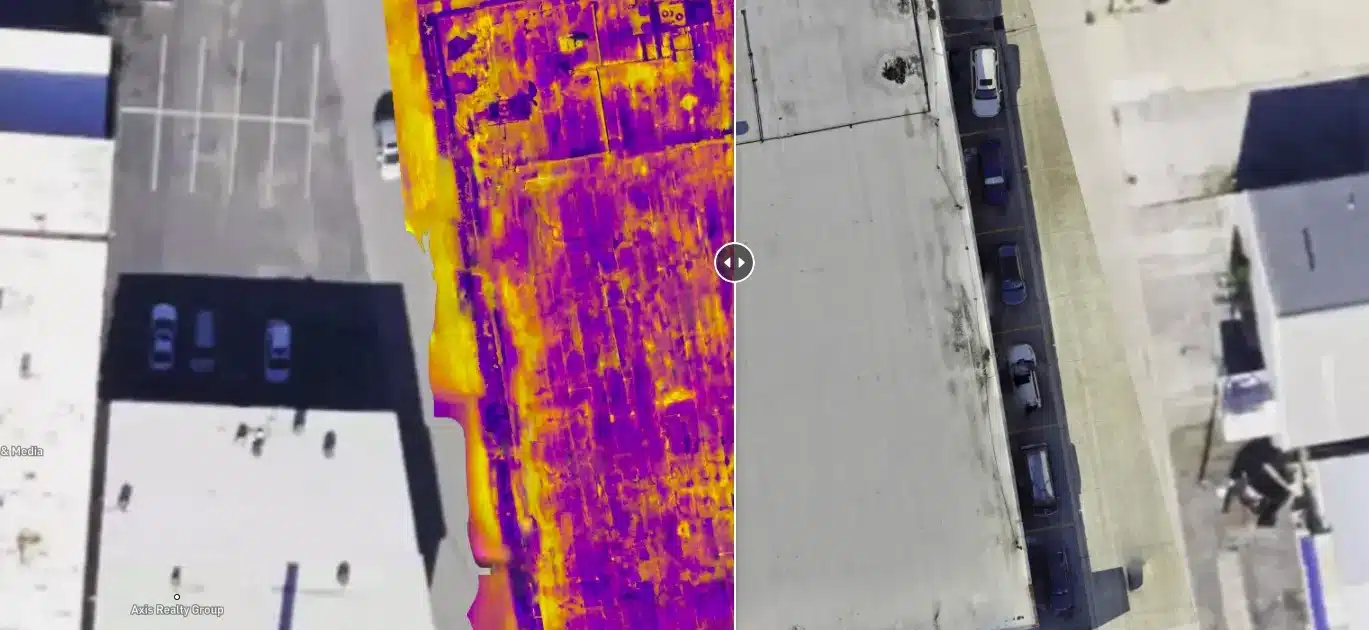
Thermal imaging capability in drone inspections dramatically reduces assessment timelines by detecting hidden damage that would require extensive manual investigation. Traditional post-hurricane inspections often miss water intrusion, insulation damage, and structural integrity issues that only become apparent days or weeks later, leading to costly supplements and claim reopens.
Thermal imaging drones can identify temperature variations indicating moisture penetration, missing insulation, and compromised building envelope integrity in a single flight. This comprehensive damage detection eliminates the need for multiple site visits and reduces additional handling by up to 50%, according to Struction Solutions’ AI-powered quality assurance metrics. The technology also enables adjusters to prioritize properties requiring immediate attention versus those suitable for standard processing, optimizing resource allocation during high-volume catastrophe events.
What safety advantages do drone inspections provide during post-hurricane roof assessments?
Drone inspections eliminate the primary safety risks associated with post-hurricane roof assessments while actually improving inspection speed and accuracy. Traditional methods require adjusters to climb onto potentially compromised roofs with missing shingles, damaged trusses, or weakened structural integrity – creating significant liability exposure.
Hurricane-damaged properties often have debris, standing water, or electrical hazards that make ground-level access dangerous. Struction Solutions’ drone inspection protocol captures detailed high-resolution imagery safely from ground level, eliminating the need for adjusters to enter hazardous areas. This approach removes the delays associated with scheduling ladder assist services, safety equipment setup, and liability insurance considerations, while delivering superior documentation through ultra-high-resolution aerial photography and thermal imaging capabilities.
How do certified drone operators ensure consistent turnaround times across different hurricane events?
Certified drone operators maintain consistent turnaround times through standardized protocols, pre-positioned equipment, and specialized training programs. Struction Solutions maintains multiple certifications including Xactimate levels 2 and 3, NFIP certification for flood claims, and Hague certification for storm damage identification. These certifications ensure operators can handle various damage types without requiring additional specialist consultations that could delay assessments.
The company’s multi-state licensing enables rapid deployment across jurisdictions without regulatory delays. Pre-disaster preparation includes maintaining dedicated drone fleets, backup equipment, and 24/7/365 call center operations. This systematic approach has enabled consistent 24-48 hour response times across every major U.S. disaster since the early 2000s, supported by deep partnerships with technology providers and government agencies.
What role does AI-powered analysis play in expediting post-hurricane drone inspection reports?
AI-powered analysis accelerates post-hurricane drone inspection reporting by automating damage detection, measurement calculations, and report generation processes that traditionally require hours of manual review. Struction Solutions’ AI algorithms can analyze high-resolution drone imagery to automatically identify hail damage, wind damage, missing shingles, and structural compromise within minutes of data collection.
The AI system generates preliminary damage estimates, calculates roof measurements, and flags areas requiring human expert review, reducing manual processing time by 70%. Machine learning capabilities improve accuracy over time by learning from adjuster feedback and claim outcomes, enabling the processing of high volumes of claims during major catastrophe events while maintaining quality standards that traditional manual methods cannot match. This technology integration represents part of a broader transformation in insurance claims processing that extends well beyond hurricane response scenarios.
Ready to transform your post-hurricane claims processing with industry-leading drone inspection services? Contact Struction Solutions today to learn how our 24-48 hour response protocol, certified adjusters, and AI-powered analysis can reduce your claim processing time by 60% while improving safety and accuracy standards.


 Struction Solutions’ Vice President of Field Operations, Tina Rodriguez, oversees and maintains claim life-cycle metrics in XactAnalysis and claim handling and estimating best practices in Xactimate for Struction Solutions.
  Struction Solutions’ Chief Operating Officer, Wayne Guillot, is a results-driven and customer-focused operations manager with over 20 years of experience in the insurance industry.
  Brady Dugan is a dynamic and visionary adjuster with over 23 years of progressive leadership in the construction and insurance industries.